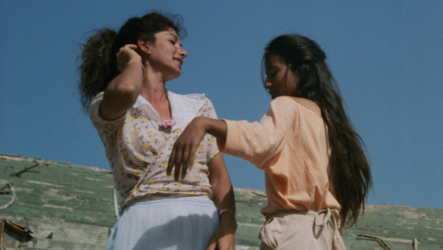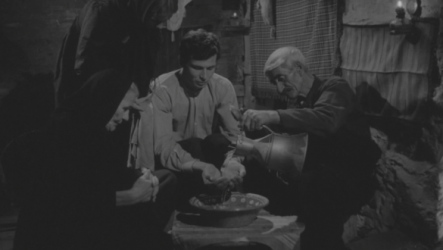


The Digital Film Restoration Lab of the Greek Film Archive, in recent 6.5K digitizations, presents Bitter Bread (1951) by Grigoris Grigoriou, a landmark of Greek neorealism that critically examines the harsh socioeconomic conditions of post-war Greece, and the documentary Winds (1967) by Apostolos Kriónas about the customs of migration in the North Aegean. The silent masterpiece The Wind (1928) by Victor Sjöström is also screened.
Director and curator of Il Cinema Ritrovato in Bologna, Ehsan Khoshbakht, presents a program of six major restored films from the history of world cinema:
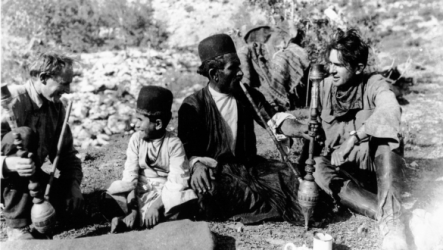
The films in this section, spanning six decades of film history, start and end in the Middle East, offering a sense of the resilience of its people. The emblematic documentary Grass (1925) follows three Americans among the nomadic tribes of Iran, while The Razor’s Edge (1985) by the great Arab filmmaker Jocelyne Saab tenderly portrays the deeply wounded Beirut.
Dorothy Arzner’s Craig’s Wife (1936) is an American masterpiece that transforms the story of a toxic hostess into a melodrama about house, territory, and power. couples of all kinds question their relationships, with cracks appearing ‒and often widening‒ amid various social backdrops. The Slovenian Paper Wings (1967) has a dazzlingly hip, nouvelle-vogue–style, while the Iranian The Postman (1972), which was impossible to see for decades, offers a darker, more allegorical vision.
Performance (1968-1970), with Mick Jagger in a role few rock stars would dare to play, unfolds a psychedelic narrative. Directors Donald Cammell and Nicolas Roeg reveal the uncharted corners of 1960s London and and the minds of the people who inhabit it, exploring the inner destruction that lies within.
These films are about the visible and invisible scars of humanity and the grandeur of rare glimpses into the human soul. At the same time, they highlight some of the most exemplary recent restorations ‒ fruits of the tireless work of film archivists, conservators, and historians.
Ehsan Khoshbakht